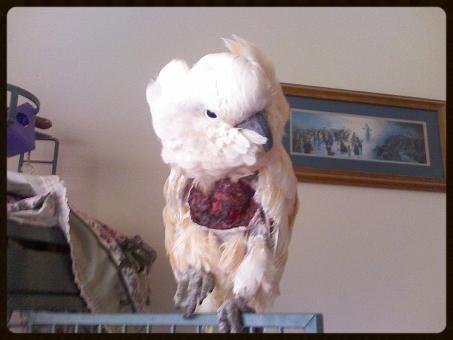
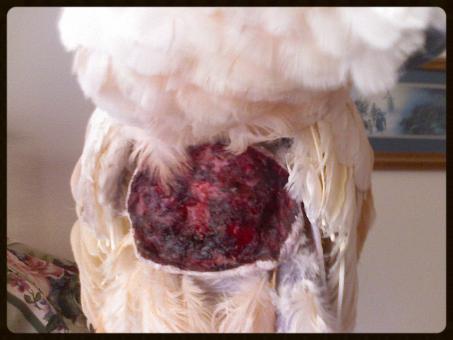
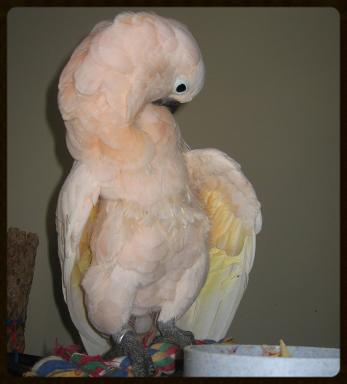
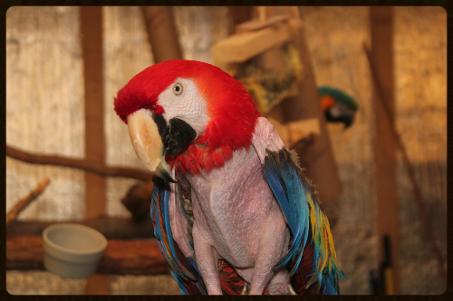
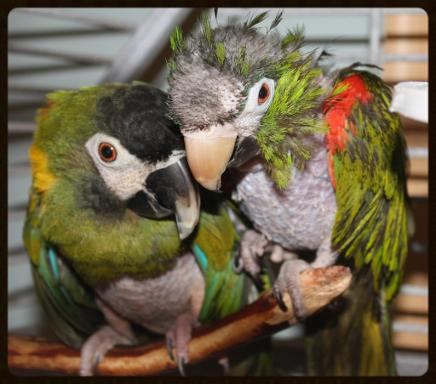
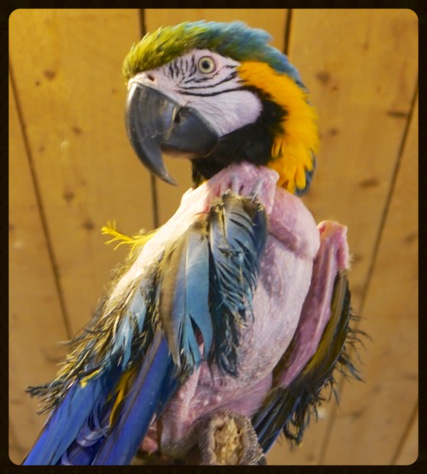
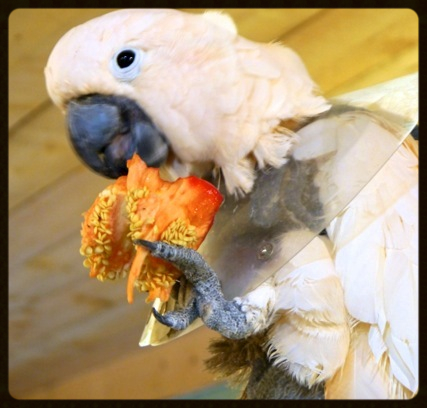
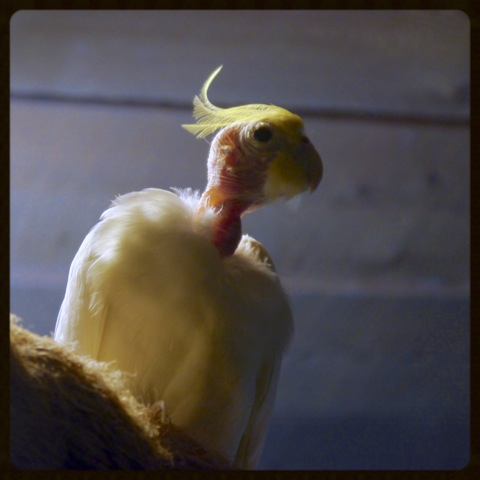
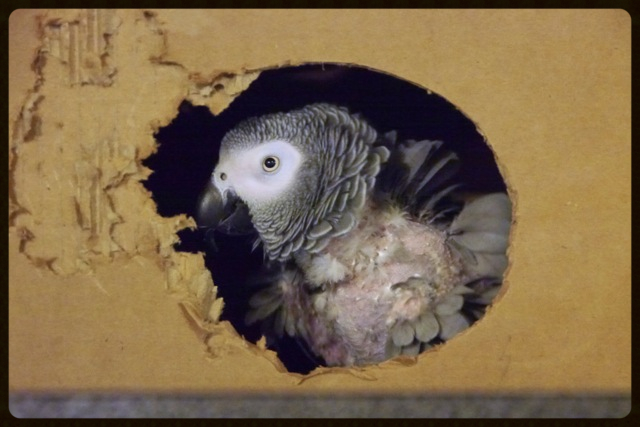
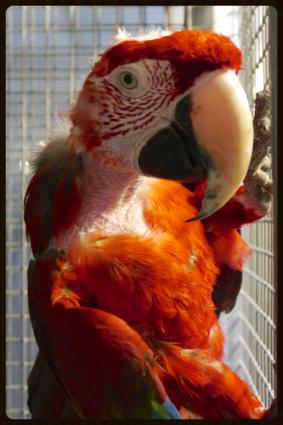
Other behaviors seen in distressed captive parrots include stereotypes like rocking back and forth, pacing and other compulsive behaviors. I did notice a few birds that would compulsively bite their skin when I would approach them as if they were nervous and the biting soothed them. As you can see by these photos, the self-destructive behaviors in parrots vary greatly on the individual. Parrots who are stressed will often act aggressively towards other birds and often times humans. They are known to destroy furniture and other household items as well. Because of the destruction, loud vocalizations and aggressive and threatening behaviors they can exhibit, parrots (especially Cockatoos) are relinquished to shelters and sanctuaries at alarming rates.
[ Special Needs Birds ]
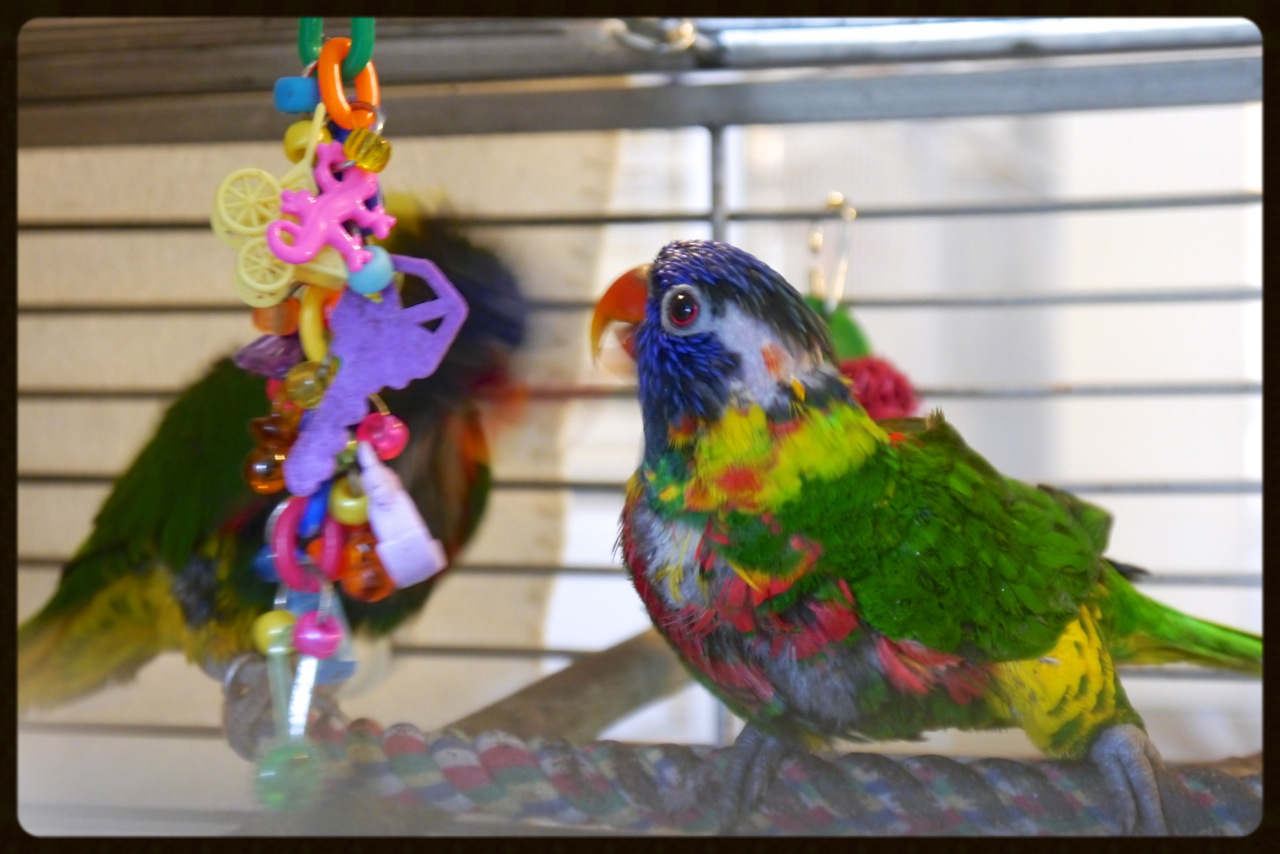
These Rainbow Lorikeets are referred to as "The Wobblies" - they were rescued from a parrot mill. While being kept at the breeding facility, they were somehow exposed to racoon feces. They were infected with Racoon Roundworm (Baylisascaris procyonis), which causes severe illness, including impairing neurological damage. The roundworm is a parasite - the larvae migrate to the brain and burrow in the tissue. Though these birds have been treated for the parasitic infection, their brain damage is permanent. This causes issues with imbalance and a bizarre "circling" motion with their bodies. Their eyes are very sensitive to light so they need to be kept in a dark area where there isn't a lot of commotion. They sometimes have trouble perching, are startled easily and need to be cared for with caution. I have spent a lot of time with these birds and despite their impairment, they seem to do very well. Their social needs are met, they exhibit healthy grooming and bonding behaviors with each other and eat a healthy diet of fruit and nectar.
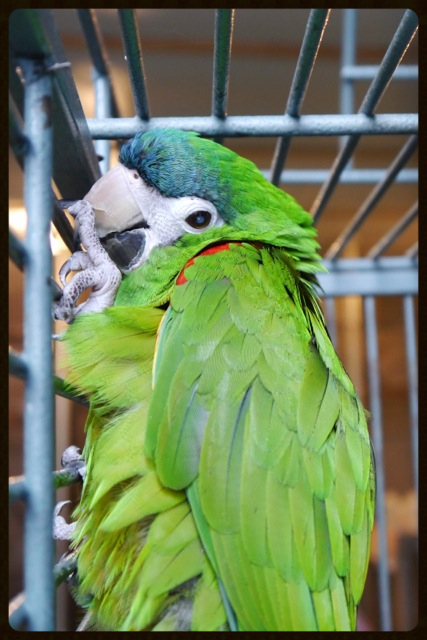
This is Jim, a Haan's Macaw. As you might be able to tell from the photo, Jim is blind. He is one of my favorite birds at the sanctuary and is fascinating to watch. Despite his impairments, he gets along quite well and has come up with several tricks to function like a normal bird. He lives with a bonded mate named Stephen, who spends a great deal of time taking care of Jim. I have watch Stephen preen Jim's feathers for him as well as support Jim's body weight when he is not secure. Stephen helps Jim find the water dish and even helps guide him across perches.
Jim's favorite place to spend time is in the protective cover of a cardboard box that is placed at the bottom of his cage. He feels most secure here. When I service Jim's cage, I like to make sure I move slowly and speak loudly so he knows I am near him. I try to make as much vibration as I can so he can tell where my hands are. Instead of eating from a dish, we put Jim's food on the ground in front of his cardboard box. He knows right away when we place it there and traces his beak along the surface until he finds a morsel, then eats it. He continues to do this until the food is all gone!
Due to Jim's blindness, he startles easily and it is amazing to see how much comfort he finds in the companionship of his friend, Stephen. Stephen immediately comes to the side of Jim when he is scared and makes sure their bodies are pressed tightly together so Jim knows he is safe. They have a beautiful and inspiring friendship.
I want to add that there are ways to care for a parrot (or parrots) at home and not all pet birds end up with these types of issues. It is important to understand that they have not been bred over time to fit in well with humans like cats and dogs have, so while in the home, they will act much more like a wild animal. People who are considering living with a companion parrot need to consider this and also be aware of the knowledge and time it takes to provide the best life possible for their bird.
There are a millions of unwanted pet birds in the United States. Many of them are in shelters and sanctuaries, while others are not so lucky and are living in unsafe and neglectful homes. To reduce this population and prevent it from growing, it is important to work towards the abolition of parrot breeding and the poaching of wild parrots for the pet trade.
